The Human Body Changes Every Second—How Do Nurses Detect the Small Changes That Could Make a Big Difference in Patient Care?
The status of a patient can change in a matter of moments. A slightly faster heart rate, an altered breathing rhythm, a different skin colour, mental confusion, or a slight change in blood pressure can initially seem irrelevant. Yet, these seemingly insignificant things can become highly significant for the experienced nurse.
It is precisely such moments that show how nursing is far beyond the scope of just following orders or measuring the vital signs of patients. Nurses constantly have to observe, evaluate, and act on changes in the condition of their patients. Students who are seeking the Best nursing college in Kerala need to know this about nursing. Nursing education needs to teach students not only theory but also the skills of observation, confidence in clinical settings, critical thinking, and compassion that they need in real-life scenarios.
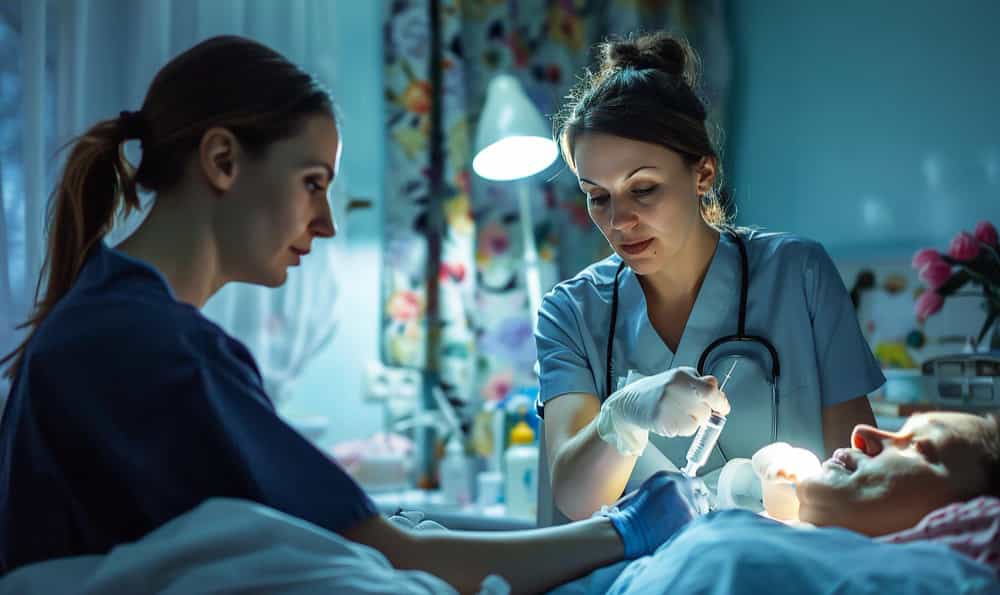
1. A Nurse Learns to Notice What Others May Miss
Communication within the body of the human is continuous. The rate at which the heart beats, the rate of respiration, temperature, blood pressure, level of oxygen, level of pain, level of consciousness, and even the conduct of a patient can provide useful information.
A nurse might realise that the patient who has been talking has become strangely quiet all of a sudden. A patient might appear agitated or anxious without showing any change in his/her vital signs. It is for this reason that nursing education entails more than books alone. It requires the chance to learn about patient behaviour, practice their clinical skills, and gain the confidence to observe the right things. Selecting the Best nursing colleges in Kerala can assist any would-be nurse in developing these crucial skills.
2. Small Changes Require Strong Clinical Thinking
Recognising a change is just the first step. The nurse should then know the implications of the change and decide on the course of action. A sudden drop in oxygen saturation would necessitate immediate assessment. Unexpected chest pain in a patient would demand attention. Drowsiness or confusion on the part of a patient might indicate a state that needs more evaluation.
Clinical judgment helps the nurse in realising why the observation was made and acts on it according to the professional standards. The whole concept of nursing is so significant due to this entire process of knowledge, observation, communication, and judgement. Students looking into top nursing colleges in Kerala would do well to go beyond the classrooms and pose a vital question: Does the college offer scope for developing clinical competence?
3. Why Practical Exposure Makes a Difference
Clinical judgement cannot be developed by nursing students through only theoretical knowledge. Through practical learning, the students get to know how the knowledge is used while treating patients. In the PKDAS College of Nursing, practical and clinical learning plays an important role in the field of nursing studies. The college focuses on faculty experience, infrastructure, laboratory, and clinical facilities, whereas the connection of the college with PK DAS Institute of Medical Sciences gives it a healthcare environment. The university provides the B.Sc. Nursing course and the M.Sc. Nursing course, where the B.Sc. Nursing course is designed as a four-year program. For students who are looking for the best BSc Nursing colleges in Palakkad
4. Technology Helps Nurses—But Observation Still Matters
There is more technology in healthcare now than ever before. The modern nurse uses monitors, electronic health information, diagnostic tests, machines, and healthcare technology. However, technology cannot take the place of the human element of nursing. The monitor can show numbers, but the nurse sees the patient behind the numbers. Is the patient comfortable? Is he/she reacting normally? Does he/she seem scared or confused? Has there been any change in his/her condition from an hour ago? Technology and human judgment need to be balanced in order to be an effective nurse in the future. It is necessary for students opting for any one of the best Private nursing colleges in Kerala to assess if their learning process equips them in both these aspects.
5. Building Nurses Who Can Make Every Observation Count
It takes continuous learning for one to become an expert nurse. Scientific knowledge, practical application, communication skills, ethics, teamwork, empathy and courage to speak out when things appear wrong are some of the important skills. Some of the important qualities in the education of professional nurses in PKDAS College of Nursing are the development of competent, compassionate, ethical and clinically competent nursing professionals. The main objectives of the college include critical thinking, competence, leadership, communication, accountability and research.
In the case of students looking for the Best BSc Nursing College in Kerala, or the Best Nursing College in South India, the question that must arise in mind is not just about ranking. Rather, the key concern should be the ability of the institution to make a student into a capable healthcare professional who can observe the changes, reason, and take care of his or her patients. Every second, our body undergoes certain changes, but the trained nurse is always ready to detect them. The ability to observe details, realise the importance of changes, and respond in an appropriate way is exactly what makes theoretical nursing skills become practical.
Thus, the key step to gaining such skills becomes selecting the proper educational institution. With its nursing courses, clinical practice, experienced faculty, infrastructure, and connections with

Panayoor, Vaniyamkulam,Ottapalam,Palakkad District-679522
Admission Hotline : +91 9656000005
Admission Email: admissions@ncerc.ac.in
Office Phone : 0466 2226000
Office Email: office@pkdascollegeofnursing.com